



Archer AX50 AX3000 Dual Band Gigabit Wi-Fi 6 Router
6,500.00৳
- Next-Gen Gigabit Wi-Fi 6 Speed—2402 Mbps on 5 GHz and 574 Mbps on 2.4 GHz band ensure smoother streaming and faster downloads.
- Connect More Devices—OFDMA technology increases capacity by 4 times to enable simultaneous transmission to more devices.
- Ultra-Low Latency—Up to 75% reduction in latency enables more responsive gaming and video chatting.
- Expanded Wi-Fi Coverage—Four high-gain external antennas and Beamforming technology combine to extend strong, reliable Wi-Fi throughout your home.
- Enhanced Security—More secure and trusted Wi-Fi with TP-Link HomeCare™.
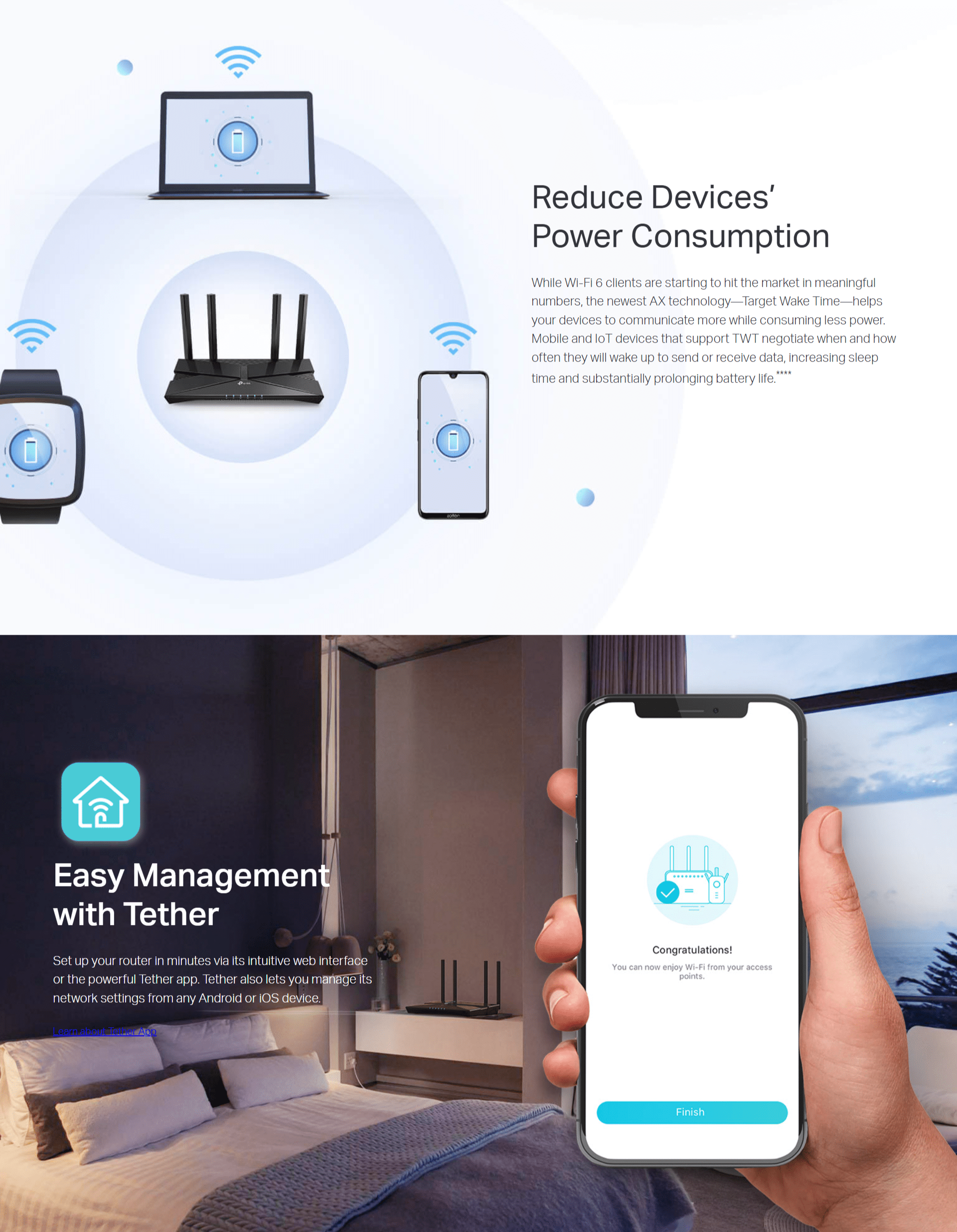
- Improved Battery Life—Target Wake Time helps your devices to communicate more while consuming less power.
- Compatible with Alexa—Control your router via voice commands and make your life smarter and easier with Amazon Alexa.
10 in stock

Archer AX50 AX3000 Dual Band Gigabit Wi-Fi 6 Router



| Standards and Protocols | Wi-Fi 6 IEEE 802.11ax/ac/n/a 5 GHz IEEE 802.11ax/n/b/g 2.4 GHz |
|---|---|
| WiFi Speeds | AX3000 5 GHz: 2402 Mbps (802.11ax, HE160) 2.4 GHz: 574 Mbps (802.11ax) |
| WiFi Range | 3 Bedroom Houses 4× Fixed High-Performance Antennas Beamforming High-Power FEM |
| WiFi Capacity | High Dual-Band OFDMA Airtime Fairness DFS 4 Streams |
| Working Modes | Router Mode Access Point Mode |
| Network Security | SPI Firewall Access Control IP & MAC Binding Application Layer GatewayHomeCare™ Antivirus Malicious Site Checker |
|---|---|
| Guest Network | 1× 5 GHz Guest Network 1× 2.4 GHz Guest Network |
| VPN Server | OpenVPN PPTP |
| WiFi Encryption | WEP WPA WPA2 WPA/WPA2-Enterprise (802.1x) |
| Processor | Dual-Core CPU |
|---|---|
| Ethernet Ports | 1× Gigabit WAN Port 4× Gigabit LAN PortsStatic Link Aggregation (LAG) available with 2× LAN ports |
| USB Support | 1× USB 3.0 Port Supported Partition Formats: Supported Functions: |
| Buttons | Wi-Fi/WPS Button Power On/Off Button LED On/Off Button Reset Button |
| Power | 12 V ⎓ 2 A |
| Protocols | IPv4 IPv6 |
|---|---|
| Service Kits | HomeCare™ |
| Parental Controls | HomeCare™ Parental Controls Custom Profiles |
| WAN Types | Dynamic IP Static IP PPPoE PPTP L2TP |
| Quality of Service | QoS by Device HomeCare™ QoS QoS by Application |
| Cloud Service | Auto Firmware Upgrade OTA Firmware Upgrade TP-Link ID DDNS |
| NAT Forwarding | Virtual Servers Port Forwarding Port Triggering DMZ UPnP |
| IPTV | IGMP Proxy IGMP Snooping Bridge Tag VLAN |
| DHCP | Address Reservation DHCP Client List Server |
| DDNS | TP-Link NO-IP DynDNS |
| Management Features | Tether App Webpage Check Web Emulator> |
| System Requirements | Internet Explorer 11+, Firefox 12.0+, Chrome 20.0+, Safari 4.0+, or other JavaScript-enabled browser Cable or DSL Modem (if needed) Subscription with an internet service provider (for internet access) |
|---|---|
| Certifications | FCC, CE, RoHS |
| Environment | Operating Temperature: 0℃~40℃ (32℉ ~104℉) Storage Temperature: -40℃~70℃ (-40℉ ~158℉) Operating Humidity: 10%~90% non-condensing Storage Humidity: 5%~90% non-condensing |
| WiFi Transmission Power | CE: <20dBm(2.4GHz) <23dBm(5.15GHz~5.35GHz) <30dBm(5.47GHz~5.725GHz) FCC: <30dBm(2.4GHz & 5.15GHz~5.825GHz) |
|---|---|
| WiFi Reception Sensitivity | 5 GHz: 11a 6Mbps:-97dBm, 11a 54Mbps:-79dBm 11ac VHT20_MCS0:-96dBm, 11ac VHT20_MCS11:-66dBm 11ac VHT40_MCS0:-94dBm, 11ac VHT40_MCS11:-63dBm 11ac VHT80_MCS0:-91dBm, 11ac VHT80_MCS11:-60dBm 11ac VHT160_MCS0:-88dBm, 11ac VHT160_MCS11:-55dBm 11ax HE20_MCS0:-95dBm, 11ax HE20_MCS11:-63dBm 11ax HE40_MCS0:-92dBm, 11ax HE40_MCS11:-60dBm 11ax HE80_MCS0:-89dBm, 11ax HE80_MCS11:-58dBm 11ax HE160_MCS0:-85dBm, 11ax HE160_MCS11:-55dBm 2.4 GHz: 11g 6Mbps:-97dBm, 11a 54Mbps:-79dBm 11n HT20_MCS0:-97dBm, 11n HT20_MCS7:-78dBm 11n HT40_MCS0:-95dBm, 11n HT40_MCS7:-75dBm 11ac VHT20_MCS0:-96dBm, 11ac VHT20_MCS11:-67dBm 11ac VHT40_MCS0:-94dBm, 11ac VHT40_MCS11:-64dBm 11ax HE20_MCS0:-96dBm, 11ax HE20_MCS11:-64dBm 11ax HE40_MCS0:-93dBm, 11ax HE40_MCS11:-61dBm |
| Dimensions (W×D×H) | 10.2 × 5.3 × 1.5 in (260.2 x 135.0 x 38.6 mm) |
|---|---|
| Package Content | Wi-Fi Router Archer AX50 Power Adapter RJ45 Ethernet Cable Quick Installation Guide |
†Maximum wireless signal rates are the physical rates derived from IEEE Standard 802.11 specifications. Range, coverage, and the maximum number of connected devices are based on test results under normal usage conditions. Actual wireless data throughput, wireless coverage, and number of connected devices are not guaranteed and will vary as a result of 1) environmental factors, including building materials, physical objects, and obstacles, 2) network conditions, including local interference, volume, and density of traffic, product location, network complexity, and network overhead, and 3) client limitations, including rated performance, location, connection quality, and client condition.
‡Use of Wi-Fi 6 (802.11ax), and features including OFDMA, MU-MIMO, and 1024-QAM require clients to also support the corresponding features.
§HE160 requires client devices that support 160 MHz bandwidth on Wi-Fi.
△802.11ax 2×2 160 MHz enables 2402 Mbps maximum theoretical data rates, 3X faster than standard 802.11ac 2×2 80 MHz (867 Mbps) and nearly 6x faster than baseline 1x1ac (433 Mbps) Wi-Fi as documented in IEEE 802.11 wireless standard specifications, and require the use of similarly configured 802.11ax wireless network routers.
*“Up to 75% lower latency” is based on Iab simulation data of 802.11ax with and without OFDMA using 9 clients. Average latency without OFDM is 36ms, with OFDMA average latency is reduced to 7.6ms. Latency improvement requires that the AP and all clients support OFDMA.
**This amendment defines standardized modifications to both the IEEE 802.11 physical layers (PHY) and the IEEE 802.11 Medium Access Control layer (MAC) that enable at least one mode of operation capable of supporting at least four times improvement in the average throughput per station (measured at the MAC data service access point) in a dense deployment scenario, while maintaining or improving the power efficiency per station.
****Saving clients’ battery power requires clients to also support the 802.11ax Wi-Fi standard. Actual power reduction may vary as a result of network conditions, client limitations, and environmental factors.
*****This router may not support all the mandatory features as ratified in Draft 3.0 of IEEE 802.11ax specification. Further software upgrades for feature availability may be required.
For router backup, order mini ups from here
Related products


TP-Link Archer C24 AC750 Dual Band Wi-Fi Router
Original price was: 1,950.00৳.1,850.00৳Current price is: 1,850.00৳.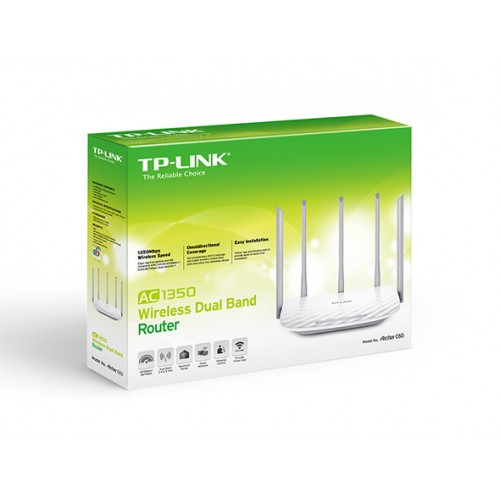
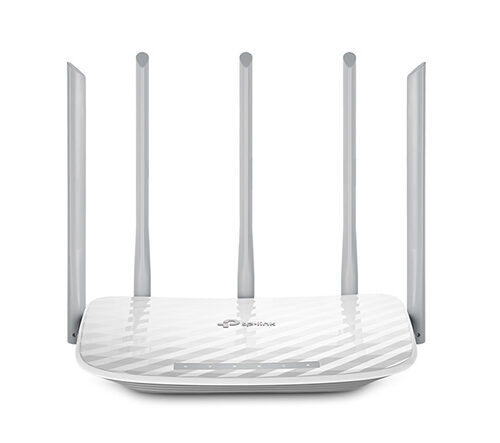
TP Link Archer C60 AC1350 Wireless Dual Band Router
Original price was: 3,500.00৳.3,100.00৳Current price is: 3,100.00৳.

TL-WR850N | 300 Mbps Multi-Mode Wi-Fi Router
Original price was: 1,400.00৳.1,300.00৳Current price is: 1,300.00৳.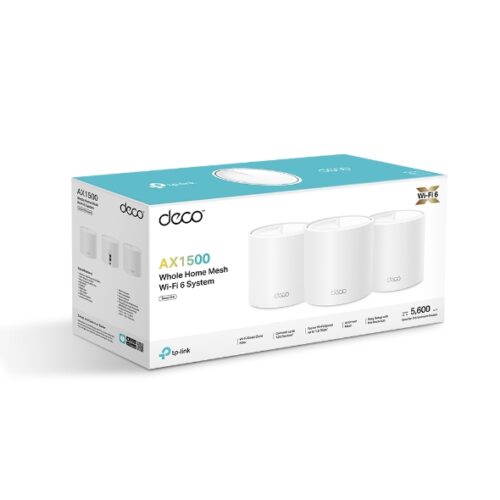
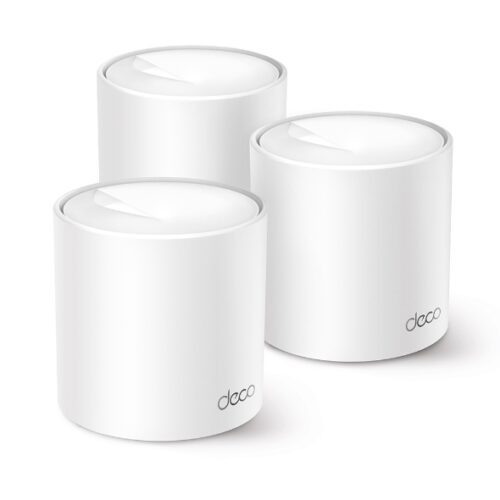
Deco X10 AX1500 Whole Home Mesh Wi-Fi 6 System
Price range: 4,500.00৳ through 13,500.00৳Add to cart This product has multiple variants. The options may be chosen on the product page